September 15, 2026
UI vs UX Design: What's the Difference? (Simple Guide)
UI and UX design are not the same. This easy book explains the difference and provides real-world examples, so you know exactly what your project requires.
Published On: August 3, 2026
Published By: Designocracy
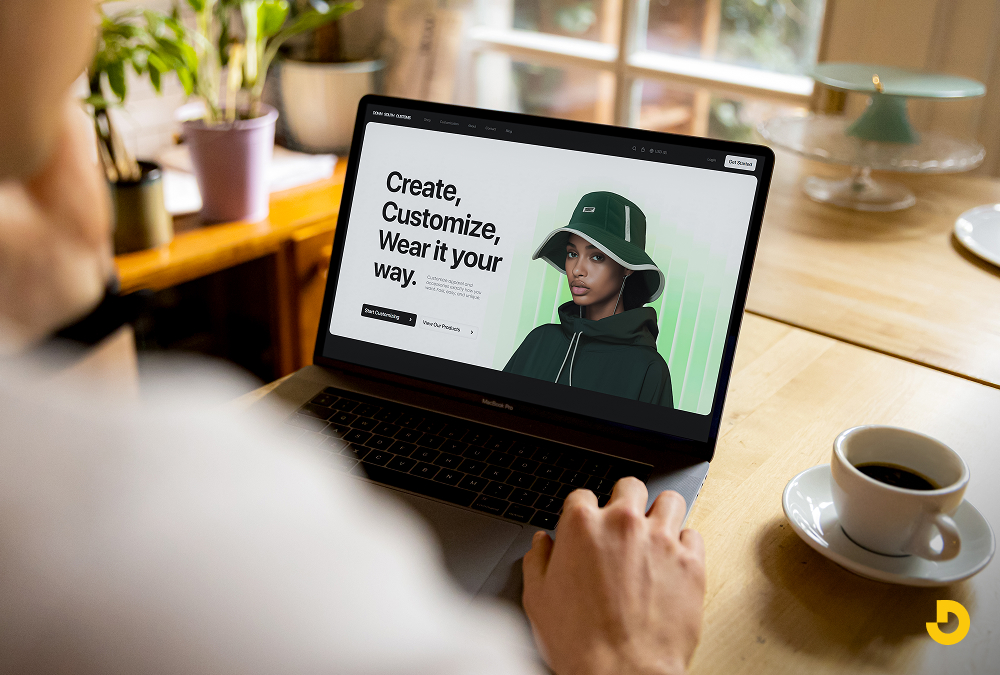
Great fashion e-commerce design helps shoppers judge fit, fabric, and style without touching the garment. The tips that matter most are a mobile-first layout, editorial product photography on every angle, honest size and fit guidance, filterable collection pages, fast load speeds, and a short guest checkout. Fashion carries the highest return rate in retail, so the strongest design choices do two jobs at once: they lift conversions and cut returns.
Selling clothes online means asking someone to buy something they cannot touch, try on, or hold up to a mirror. No other e-commerce category asks for that much trust. That is why fashion e-commerce website design is not really about looking pretty. It is about closing the gap between a photo on a screen and the moment a package lands on a doorstep.
Get that gap right, and shoppers will buy with confidence. Get it wrong and you get the fashion industry's signature problem: the item comes back. This guide covers the apparel store web design choices that actually move the numbers, plus a scorecard you can use to audit your own store in ten minutes.
Most e-commerce advice treats every product the same. A phone case, a protein powder, and a linen blazer all get the same "add clear photos and a fast checkout" recipe. That advice is not wrong, but it misses what makes apparel uniquely difficult.
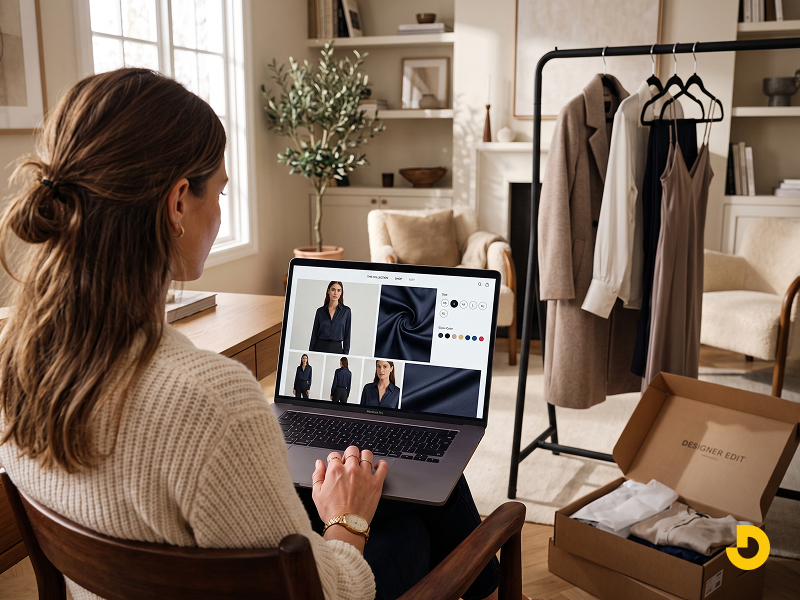
Fashion shoppers are answering questions a spec sheet cannot cover. Will this fit my shoulders? Is the fabric heavy or thin? Is the colour truly ecru, or is that just the lighting? Does it look like this on someone shaped like me? When your design fails to answer those questions, shoppers do one of two things. They leave, or they order three sizes and send two back.
That is the lens for everything below. Every tip here is judged on a simple test: does it help someone decide correctly the first time?
Here is the short version, mapped to the problem each one solves. The detail follows underneath.
Fashion e-commerce design tips and what each one fixes
| Design Element | What It Does | Why It Matters for Apparel |
|---|---|---|
| Mobile-first layout | Designed for the phone first, then scaled to desktop. | Most fashion browsing happens on a phone, often mid-scroll from social. A clumsy mobile grid loses the sale instantly. |
| Multi-angle photography | Front, back, side, detail, and on-body shots. | Replaces the fitting room. Missing angles create doubt, and doubt creates returns. |
| Fabric & texture detail | Close-up crops plus weight, drape, and stretch notes. | Shoppers cannot feel the cloth. Texture shots and honest fabric notes do that job for you. |
| Size & fit guidance | Real measurements, model height and size worn, fit notes. | The single biggest driver of apparel returns is fit. Better guidance means fewer wrong orders. |
| Filterable collection pages | Filter by size, colour, price, fit, and occasion. | Large catalogues become unshoppable without filters. Shoppers give up before they browse. |
| Fast load speed | Compressed images, lazy loading, clean code. | Fashion sites are image-heavy by nature — the category most at risk of being slow. |
| Consistent colour accuracy | Calibrated shots and true-to-life colour naming. | "It looked different online" is a top return reason and a trust killer. |
| Short guest checkout | Few fields, guest option, clear shipping and returns. | Forced account creation and surprise costs are where full carts get abandoned. |
| Visible returns policy | Stated plainly, before checkout — not buried. | Counterintuitive but proven: a clear, generous policy increases the confidence to buy. |
| Social proof with photos | Reviews that include fit feedback and customer images. | Real bodies in real garments answer the question your model shots cannot. |
Every row solves a fashion-specific problem, not a generic e-commerce one.
Fashion discovery is a phone activity. Someone sees a jacket on Instagram, taps through, and lands on your collection page while standing in a queue. If your grid is cramped, your filters are hidden behind three taps, or your images stutter as they load, that visitor is gone before they have seen a single price.

Build the phone view first. Give products room to breathe in a two-column grid. Keep filters reachable with one thumb. Make the "add to bag" button sticky so it never scrolls out of reach. For the technical side of getting this right across every screen, our guide to responsive web design covers the fundamentals.
One hero shot is not a product page. Shoppers want the back, the side, the hem, the hardware, and the way the fabric falls when someone moves. Give them at least five images, and make one of them a close crop that shows the weave.
Add a short fabric note in plain language — "midweight, slight stretch, holds its shape" tells a shopper more than "95% cotton, 5% elastane" ever will. Use both. One is for the spec-readers, one is for everyone else.
Most stores bury a generic size chart behind a link and call it done. That is a missed opportunity, because sizing is where fashion e-commerce is won or lost.
Put the model's height and the size they are wearing directly under the image. Publish real garment measurements, not just S/M/L. Add a fit note when a piece runs small or oversized. If your budget allows, a fit-finder tool that asks two or three questions will pay for itself in reduced returns.
A shopper who cannot filter is a shopper who leaves. Filters by size are especially powerful — showing someone only what is available in their size removes the most frustrating experience in online fashion, which is falling for something that is sold out in your size.
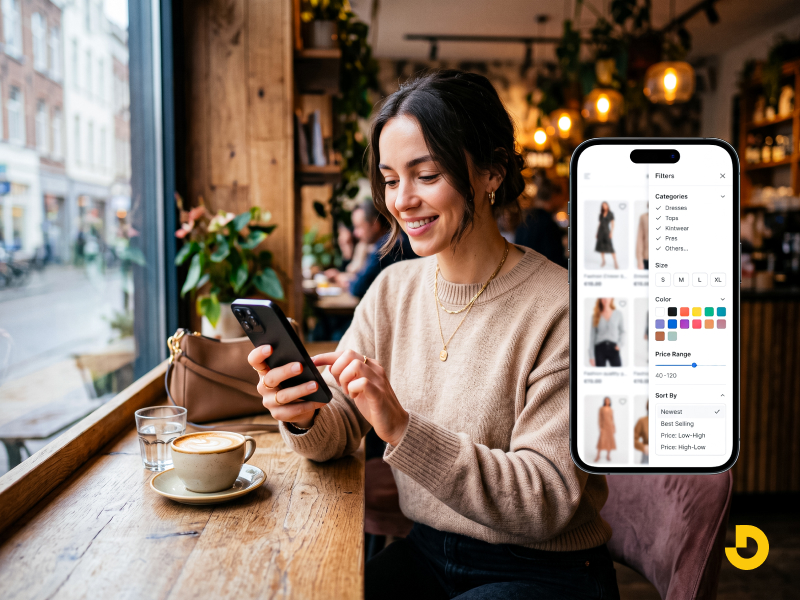
Sort options matter too: new in, price, and best-selling cover most intent. Keep the filter drawer sticky on mobile so refining does not mean scrolling back to the top.
Turn your fashion eCommerce vision into a high-converting online store with expert design, seamless user experience, and mobile-first performance.
Book Your Free ConsultationFashion sites carry more images than almost any other category, which makes them the most likely to load slowly. Every extra second costs conversions and hurts your rankings.
Compress and serve modern formats like WebP. Lazy-load anything below the fold. Cut heavy scripts and third-party widgets you are not actively using. Then test it — speed problems are invisible on a designer's fast connection and painfully obvious on a shopper's phone. Our guide to SEO for e-commerce websites explains how speed feeds directly into search visibility.
Nothing erodes trust faster than a garment arriving in a shade the customer did not order. Shoot on consistent lighting, calibrate your screens, and name colours honestly — "warm sand," not "beige," if that is what it is. Where a colour is tricky, say so in the copy. Shoppers forgive honesty; they do not forgive surprises.
The cart is where good intentions die. Every extra field, every forced account, every shipping cost revealed at the last second is a reason to close the tab.
Offer guest checkout. Show shipping costs and delivery windows early. Display your returns policy right there, because in fashion, the returns policy is a conversion tool — it is the safety net that makes someone comfortable clicking buy on an unfamiliar fit.
Model shots sell the fantasy. Customer photos sell the reality. Reviews that include the reviewer's height, usual size, and a one-line fit comment ("runs a touch long, I sized down") are the closest thing online fashion has to a friend in the fitting room.

Here is the part you can act on today. Open your own store on your phone and score each row honestly. Give yourself 0 if it is missing, 1 if it is partly there, and 2 if it is genuinely done well. Twenty points available.
| Check | What "2 points" looks like | Score |
|---|---|---|
| Mobile grid | Clean two-column grid, sticky add-to-bag, no pinching. | __ / 2 |
| Image count | Five or more angles including back and detail crop. | __ / 2 |
| Fabric information | Texture close-up plus a plain-language feel note. | __ / 2 |
| Model reference | Height and size worn shown on the product page. | __ / 2 |
| Real measurements | Garment measurements, not just S/M/L. | __ / 2 |
| Size filtering | Can filter a collection to in-stock items in one size. | __ / 2 |
| Load speed | Collection page usable in under ~3 seconds on mobile data. | __ / 2 |
| Colour honesty | Consistent lighting and descriptive, accurate colour names. | __ / 2 |
| Checkout length | Guest checkout, costs shown early, minimal fields. | __ / 2 |
| Fit-led reviews | Reviews show fit feedback and customer photos. | __ / 2 |
Score it once, fix the two lowest rows, then score again in a month.
Design decisions live or die on the platform underneath them. Shopify is the fastest route for most apparel brands, with strong variant handling for size and color out of the box. WooCommerce offers more control if you already run WordPress and want to own the stack. Magento suits large catalogues with complex needs, and a fully custom build makes sense when your merchandising is genuinely unusual.
None of these is automatically right. The honest answer depends on your catalogue size, your team's technical comfort, and your budget. If Shopify is where you are heading, our walkthrough on how to design a Shopify website in six steps is a practical place to start, and our top tips for the best e-commerce website design cover the cross-platform principles. If you are still costing the project, our breakdown of how much a website costs sets realistic expectations before you brief anyone.
The best fashion e-commerce design does something quietly powerful: it makes the right customer buy the right size the first time. That is the whole game. Beautiful photography, honest sizing, a fast mobile experience, and a checkout that gets out of the way are not separate goals — together they raise conversions and lower the return rate that eats apparel margins alive.
At Designocracy, we build online stores around exactly that principle, combining editorial-grade design with the product page, fit, and checkout decisions that keep garments sold rather than shipped back. If your store looks good but is not converting — or is converting and then bleeding returns—that is a design problem worth solving.
Turn your fashion eCommerce vision into a high-converting online store with expert design, seamless user experience, and mobile-first performance.
Book Your Free Consultation