When a furnace dies in January or an air conditioner quits in July, homeowners do not browse. They search, tap the first trustworthy result, and call. For most heating and cooling companies, that moment happens on a phone, and the website is what decides whether the phone rings for you or for the competitor one result down.
This HVAC web design guide lays out a complete 2026 strategy for contractors: what your site needs, how to structure it, which features earn calls, how to choose between a site builder and a custom build, and how to pick the right partner. Whether you are researching web design for HVAC for the first time or rebuilding a site that has stopped performing, you will find a practical plan below.
Why HVAC Website Design Matters
Web design HVAC contractors rely on is different from a typical brochure site. HVAC demand is urgent, local, and seasonal. A visitor with no heat wants three things within seconds: proof you serve their area, a way to reach you right now, and a reason to trust you in their home.
Strong website design for HVAC delivers all three. It also supports everything else you spend money on. Paid ads, local listings, and referrals all send people to your site, and a slow or confusing HVAC website wastes that traffic. Many contractors invest in marketing before fixing the site, then wonder why leads stay flat.
What Makes the Best HVAC Website
The best HVAC website is not the flashiest. It is the one that makes the next step obvious. Here are the elements that matter most.
A Click-to-Call Button That Never Disappears
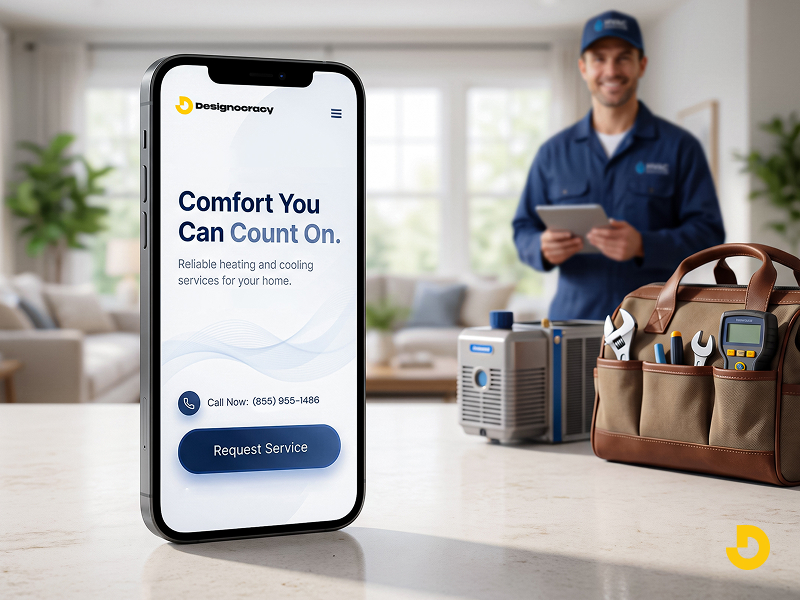
Put your phone number in the header and keep a tap-to-call button visible as visitors scroll on mobile. Emergency intent is the most valuable traffic you will get, and it should never need a search for how to contact you.
Dedicated Service Pages
Give each core service its own page: AC repair, AC installation, furnace repair, heating installation, heat pumps, duct cleaning, indoor air quality, and maintenance plans. One page per service lets you rank for specific searches and gives visitors exactly the information they came for.
Service Area Pages
If you serve more than one city or county, build a page for each, with local details, not copied text with the city name swapped. This is the backbone of local SEO for HVAC companies and a big reason sites rank in the places they actually work.
Trust Signals Above the Fold
Show your license, insurance, and any certifications you hold, such as NATE-certified technicians where applicable, plus review ratings, years in business, and any guarantees. Homeowners are inviting you into their house, so credibility has to be visible immediately.
Real Photos of Real Technicians
Photos of your actual team, trucks, and completed installs outperform generic stock images. They answer the unspoken question: who is going to show up at my door?
Easy Booking and Request Forms
Short forms convert better than long ones. Ask for the name, phone number, address or ZIP code, and the problem, then confirm the request clearly. If you offer online scheduling, link it from every key page.
Financing, Offers, and Maintenance Plans
System replacements are big purchases. Clear financing information, seasonal offers, and a visible maintenance plan page help visitors move from research to action and build a recurring revenue story for you.
Reviews and Social Proof
Embed recent Google reviews and add short testimonials near the places where visitors decide to call, such as service pages and the contact section.
Speed and Mobile Performance
Most HVAC searches happen on phones, often in stressful moments. Pages need to load fast and work well one-handed. Responsive website design that adapts to every screen is the baseline, and our guide on how to make a website mobile friendly walks through the checks.
Essential Pages for HVAC Company Websites
Most HVAC company websites need the same core structure. Use this table as a planning checklist:
| Page |
Purpose |
Key Elements |
| Home |
Orient and convert |
Call button, services, trust signals, reviews |
| Service pages |
Rank for specific services |
Problem, solution, process, call to action |
| Service areas |
Local search visibility |
Unique local content per city or county |
| Emergency service |
Capture urgent demand |
Phone-first layout, hours, response promise |
| Maintenance plans |
Recurring revenue |
Plan benefits, pricing, signup |
| Financing and offers |
Support big purchases |
Terms overview, seasonal promotions |
| About and team |
Build trust |
Real photos, licenses, certifications |
| Reviews |
Social proof |
Embedded ratings and testimonials |
| Blog and resources |
Authority and traffic |
Cost guides, repair vs replace, seasonal tips |
| Contact |
Final conversion |
Form, map, phone, hours |
HVAC Website Ideas That Win More Calls
Looking for HVAC website ideas? These are practical features that fit how heating and cooling customers actually behave:
- A seasonal homepage banner that switches between AC and heating promotions.
- A sticky call bar on mobile with a short, urgent label such as Need Help Now?
- A repair or replace guide that helps owners decide, with a call to action at the end.
- A simple system sizing or cost range explainer to answer the most common pre-call question.
- A same-day or emergency availability badge, only if you can honor it.
- A before-and-after gallery of installs with the system type and location.
- A maintenance plan comparison with a clear signup path.
- Short technician bios with photos to humanize the first visit.
- A neighborhood or city section on service pages so each location feels covered.
Air Conditioning Website Design: Planning for Seasons
Air conditioning website design has a rhythm that general business sites do not. Cooling demand spikes in warm months and heating demand in cold ones, so your site should shift with the calendar. Update homepage messaging, offers, and featured services ahead of each season, and keep both cooling and heating pages strong year-round. Build seasonal landing pages, such as pre-summer tune-ups, so you can promote them in ads and email without touching the main layout.
HVAC Website Builder vs. Custom HVAC Website Development
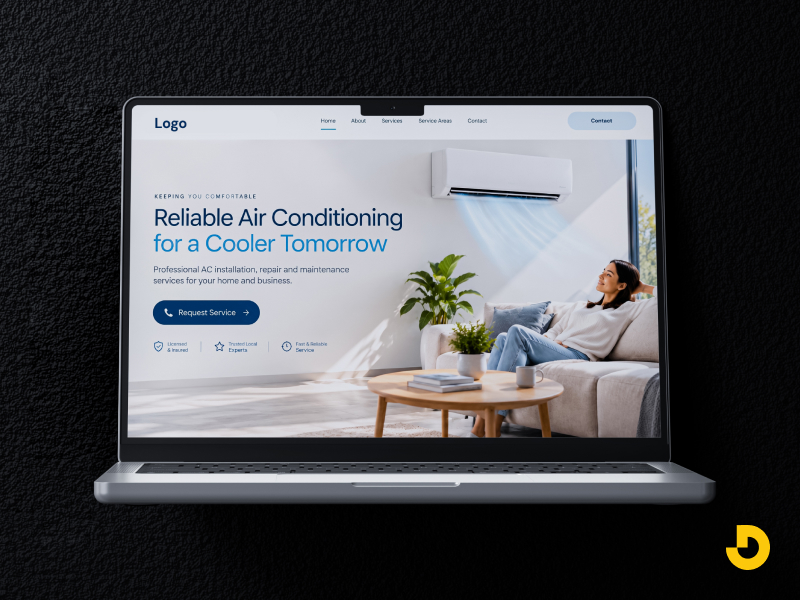
A common question is whether an HVAC website builder is enough. Drag-and-drop platforms and industry templates can get a basic site online quickly, but they have trade-offs. Custom HVAC website development gives you control over structure, speed, and conversion paths.
| Option |
Strengths |
Limitations |
| DIY website builder |
Fast and low upfront cost |
Generic layouts, limited SEO control, you do all the work |
| Industry template |
HVAC-specific sections out of the box |
Many competitors look alike, limited customization |
| Custom design and development |
Unique brand, tailored conversion paths, better performance control |
Higher upfront investment, longer timeline |
Builders suit very small operations testing the waters, and they are a common starting point for websites for HVAC businesses that are just getting started. If competing for calls in a busy market is the goal, a custom web design built around your services and service area usually pays back faster.
HVAC Website Development: Technical Foundations
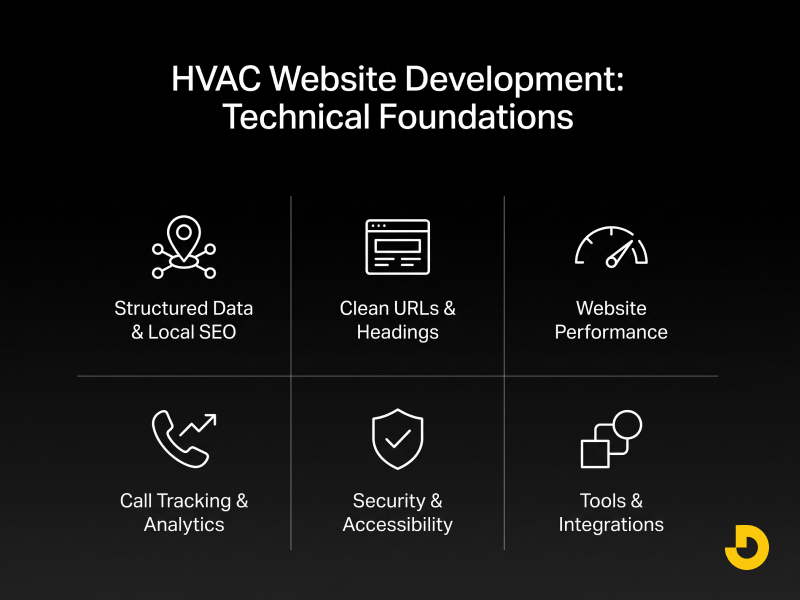
Under the hood, good HVAC website development covers more than looks:
- Structured data: use local business markup, including the HVAC business type, so search engines understand your services, hours, and areas.
- Clean URLs and headings: one H1 per page, logical subheadings, and descriptive page addresses.
- Performance: compressed images, lean code, and fast hosting.
- Call tracking: track which pages and campaigns produce calls and forms.
- Security and accessibility: HTTPS, readable contrast, descriptive alt text, and keyboard-friendly navigation.
- Integrations: connect forms and scheduling to the tools your office already uses.
Conversion: Turning HVAC Website Visitors Into Calls
Traffic only matters if it converts. Dedicated landing pages for ads, a clear offer, and a single obvious action outperform pages that try to do everything. For the elements that make these pages work, see our breakdown of a high-converting landing page.
HVAC Web Design Springfield: Designing for Your Local Market
If you are searching for HVAC web design Springfield contractors can rely on, keep in mind that Springfield is a common city name in several states, so make sure your site is unmistakably tied to your own market. Include your city, county, and surrounding towns in page titles, headings, and service area pages; embed an accurate map and listing details; and reference local conditions, such as the climate, typical home ages, and seasonal demand, that your customers recognize.
The same principle applies wherever you work. Local specificity is what separates a site that ranks and converts from one that reads as if it could belong to any company in any city.
How to Choose an HVAC Web Design Agency
Whether you are comparing an HVAC web design agency, an HVAC website design agency, or an HVAC web design company, evaluate the work behind the pitch. Good HVAC web design services should include strategy, design, development, and a plan for being found, and any website design for HVAC company owners should be tied to your real services and service area.
- Relevant examples: ask for contractor or home service sites and what results they produced.
- SEO included: design and search visibility should be planned together.
- Mobile-first process: ask to see designs on a phone first.
- Ownership: you should own your domain, content, and site files.
- Clear scope and timeline: know what is included and when it launches.
- Support after launch: updates, security, and improvements matter.
Designocracy builds sites for contractors through its contractor industry page, combining design with local search so the site is built to be found and to convert. The team also publishes city-level service pages, which is useful for companies serving multiple areas.
How Much Does HVAC Website Design Cost?
Costs depend on page count, custom design, integrations, photography, and ongoing support. DIY platforms sit at the low end, template-based builds in the middle, and custom projects at the high end. Ask every provider for a written scope so you can compare like with like. For a broader view of what drives pricing, read our guide on how much a website costs in 2026.
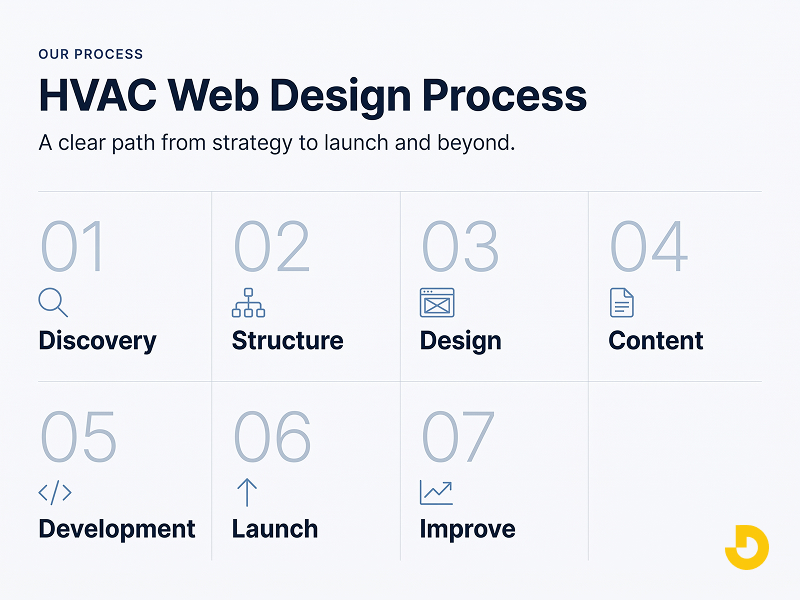
HVAC Web Design Process: What to Expect
- Discovery: goals, services, service areas, competitors.
- Structure: sitemap, page templates, and calls to action.
- Design: mobile-first layouts and brand styling.
- Content: service copy, local pages, photos, and reviews.
- Development: build, speed optimization, tracking, and integrations.
- Launch: testing, redirects from the old site, and search setup.
- Improve: review calls and form leads, then refine pages.
Common HVAC Website Mistakes
- Hiding the phone number or making callers hunt for it.
- One generic services page instead of dedicated pages.
- Stock photos in place of real technicians and installs.
- No service area pages, so the site only ranks for one city.
- Slow mobile pages and oversized images.
- Outdated offers, expired promotions, and old seasonal banners.
- Long forms that put people off in an emergency.
Final Thoughts
The best HVAC website designs share a few traits: they load fast on phones, make calling effortless, show proof of trust, and speak clearly to the specific places and services the company covers. Start with the structure, then layer in seasonal offers and local content. A site built this way works every hour of the day, including the 2 a.m. emergency calls that matter most.