
September 24, 2026
Local SEO Guide: How Small Businesses Can Dominate Google Maps
A practical local SEO guide for small businesses that want to rank higher on Google Maps. Real steps, no fluff, just what actually moves the needle.
Published On: May 11, 2026
Published By: Designocracy
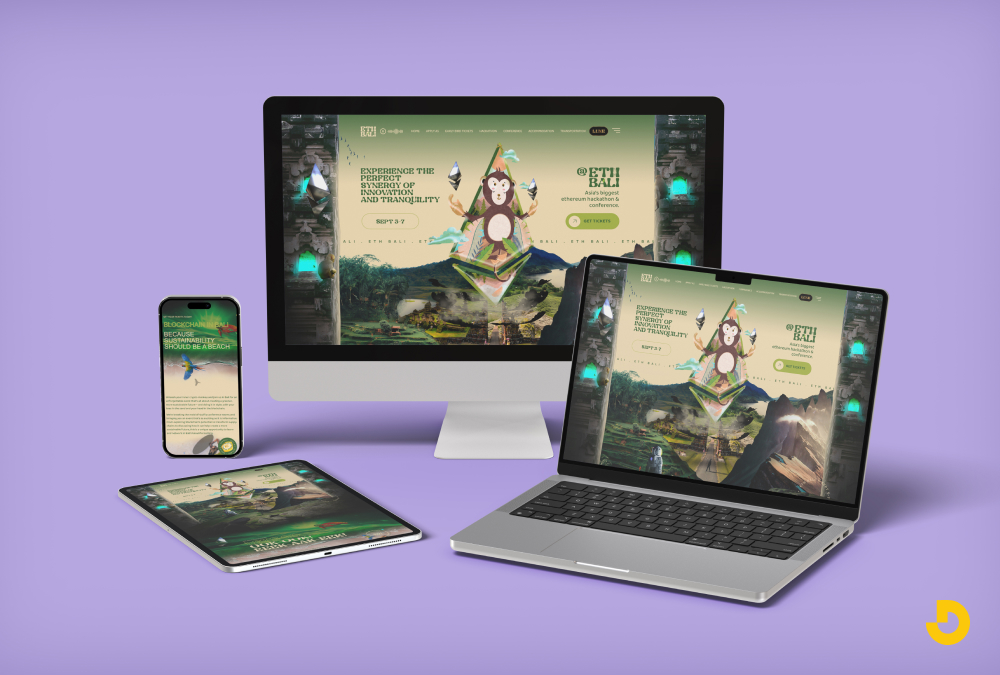
A responsive web design company builds websites that automatically adjust to any screen size. Desktop, tablet, or phone. The layout shifts. Text resizes. Buttons become tappable. Images scale down. No zooming. No horizontal scrolling. Responsive design is not a separate mobile site. It is one flexible site that works everywhere. Google recommends responsive design and uses mobile-first indexing. That means Google looks at your mobile version first to decide rankings.
Why it matters right now:
If your site isn't responsive, you're invisible on more than 60% of web traffic. Google ranks mobile-friendly sites higher. This guide explains exactly what a responsive agency does and how to pick the right one.
More than 60% of web traffic comes from phones. If your site does not work well on a small screen, you lose most of your audience.
But here is the problem. Many business owners still think of mobile design as an afterthought. They build a desktop site. Then they squeeze it onto a phone screen. Text is tiny. Buttons are impossible to tap. Users leave within seconds.
A responsive web design company fixes this. They build sites that look right on every device from the start.
And Google cares about this. The search engine uses mobile-first indexing. That means Google looks at the mobile version of your site to decide how to rank you. No mobile-friendly site. No rankings. No traffic.
Responsive web design is a technical approach to building websites. The site uses flexible grids, flexible images, and CSS media queries. These elements work together to detect the user's screen size and adjust the layout.
Think of water pouring into different shaped glasses. The water takes the shape of the container. Your website should do the same.
A non-responsive site has a fixed width. On a phone, the user sees a tiny version of the desktop site. They have to pinch and zoom to read anything.
A responsive site uses percentages instead of fixed pixels. A column takes up 50% of the screen, not 500 pixels. When the screen gets smaller, columns stack vertically. Text gets larger or smaller proportionally.
Professional responsive web design companies use several core techniques.
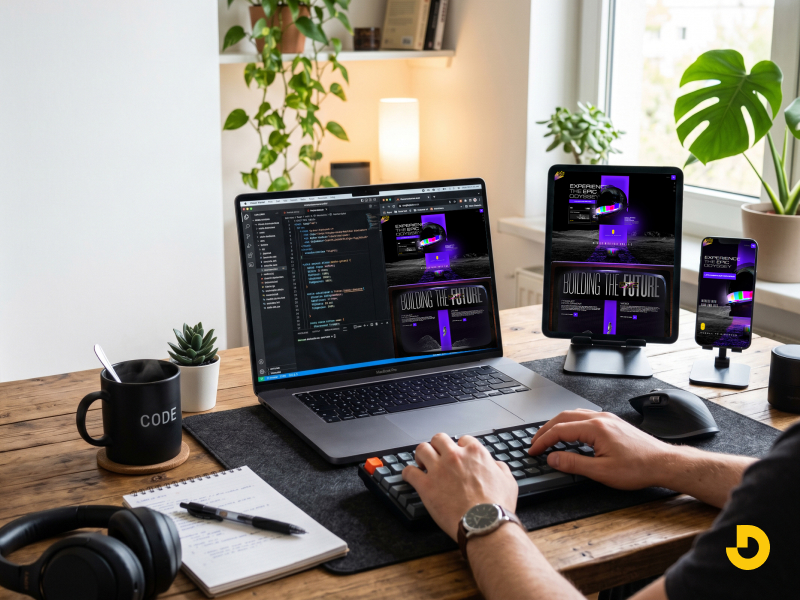
A responsive web design agency like Designocracy uses all these techniques. They do not rely on templates or page builder hacks. They write custom code that adapts perfectly to every device.
When you hire a responsive web design company, you get more than just a mobile-friendly site.
The benefits of responsive web design go beyond aesthetics.

According to industry data, 53% of users will leave a mobile site that takes longer than three seconds to load. And 62% of companies that redesigned their site for responsive design saw increased sales. Those numbers are hard to ignore.
Not all responsive web design is equal. Some companies claim to build responsive sites. But they use shortcuts. Here is what the best responsive web design actually looks like.
You can test any site yourself. Open it on your phone. Try to read text without zooming. Tap a button. Fill out a form. If it frustrates you, it will frustrate your customers.
You can build a responsive site using Wix, Squarespace, or Shopify themes. Those platforms claim to be responsive. But they have limits.
Page builders generate generic code. That code is often bloated and slow. Customizations break responsiveness. You add one element in the wrong place and your mobile layout falls apart.
A professional responsive web design company writes clean, efficient code. They test on real devices. They handle edge cases that page builders ignore.
Page builders work for simple brochure sites. For e-commerce, business lead generation, or any site where speed and conversions matter, hire professionals.
Designocracy builds custom responsive sites for clients who cannot afford to lose sales due to bad mobile experiences. Their clients include healthcare providers, e-commerce stores, and professional services firms.
Here are specific things to look for.
A reputable responsive web design agency will answer these questions clearly. If they get defensive or vague, walk away.
Google uses mobile-first indexing. That means Google crawls and indexes the mobile version of your site. If your mobile site is missing content that exists on desktop, that content does not rank.
Responsive design avoids this problem. One URL. One set of content. Google crawlers see the same thing users see.

Separate mobile sites create problems. You end up with m.example.com and example.com. Content gets duplicated or missing. Backlinks are split between two domains. Maintenance becomes a headache.
Responsive design is not just Google's recommendation. It is the cleanest technical solution.
Even experienced designers make these errors.
Designocracy builds responsive sites that actually work. Their process is straightforward.

First, they audit your current site. They identify mobile usability issues and performance bottlenecks.
Second, they design mobile-first wireframes. Navigation, content hierarchy, and calls to action are planned for the smallest screen first.
Third, they develop using modern HTML, CSS, and JavaScript. No bloat. No unnecessary plugins. Clean, commented code.
Fourth, they test on dozens of real devices. Physical phones and tablets, not just browser emulators.
Fifth, they provide training. You learn how to update content without breaking responsiveness.
The result is a site that loads fast, ranks well, and converts visitors on any device.
Yes. More than ever.
New devices appear every year. Foldable phones. Smart TVs. Car displays. Responsive design with flexible grids and media queries adapts to any width. Other approaches require constant rebuilding.
Responsive design is not a trend. It is a standard. Every serious website should be responsive.
If your site is not responsive, you are losing traffic and sales. A responsive web design company can fix that.
Your website is often the first interaction customers have with your business. If that interaction is frustrating on a phone, they will not come back. They will find a competitor with a better site.
Responsive web design is not optional anymore. It is a requirement for search rankings, user experience, and conversions.
You do not need a separate mobile site. You do not need to rebuild from scratch every few years. You need one flexible site that works everywhere.
If you want help getting there, contact Designocracy. They build responsive sites that work on every screen.
And if you want to test your current site, open it on your phone right now. Try to find your phone number. Try to fill out a contact form. If it is hard, you know what to do next.