October 6, 2026
Rebranding Guide: When and How to Do It Right
A practical rebranding guide that explains when it's time to rebrand, how to do it without losing clients, and what mistakes to avoid.
Published On: July 7, 2026
Published By: Designocracy
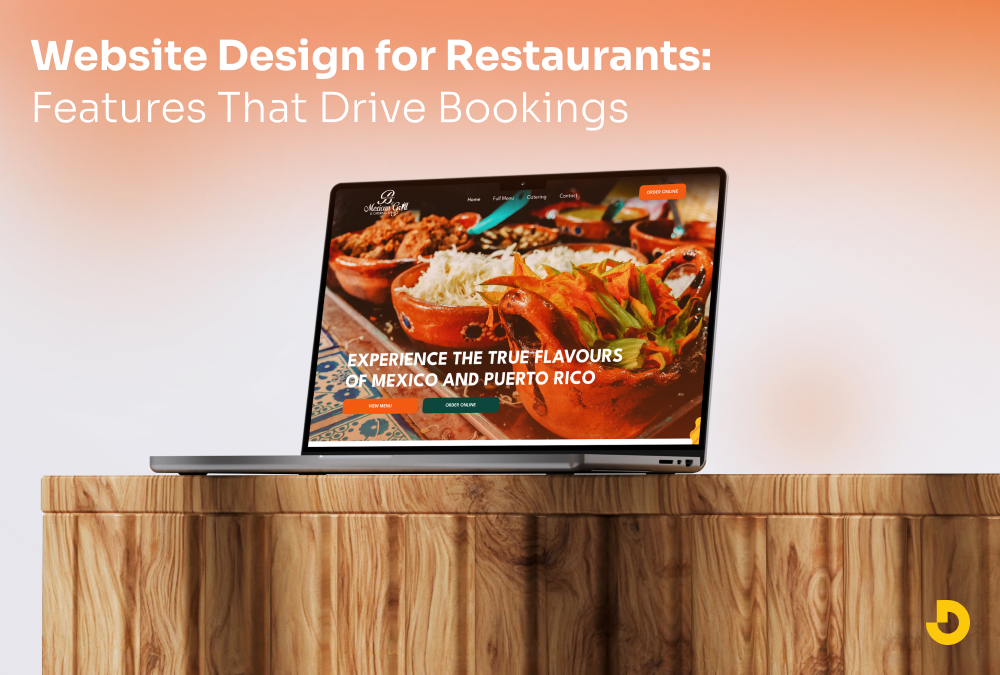
The best restaurant websites turn hungry visitors into paying guests by making three things effortless: seeing the menu, booking a table, and finding the location. The features that drive the most bookings are a mobile-first design, an online reservation system, click-to-call buttons, an easy-to-read menu, fast load speeds, real food photos, and strong local SEO. Get these right and your website becomes your busiest host.
Your restaurant could have the best food in town, but if your website is slow, hard to read on a phone, or missing a "Book a Table" button, you are losing guests before they ever taste a thing. Today, most people decide where to eat by pulling out their phone and searching. Your website is the first impression, and it needs to work as hard as your kitchen.
In this guide, we break down the exact features that turn website visitors into booked tables, plus the design mistakes that quietly cost restaurants customers every day.
Diners research before they dine. They check your menu, look at photos, read reviews, and confirm your hours, all before deciding to visit. If any of that is missing or frustrating to find, they simply move on to the next restaurant.
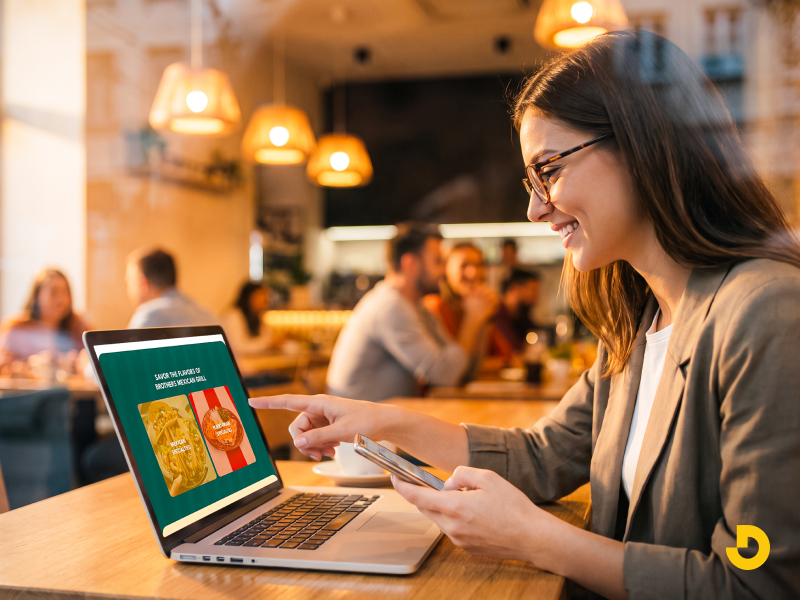
A well-designed restaurant website does three jobs at once. It builds trust with great visuals and clear information, it makes booking or ordering simple, and it helps you show up on Google when locals search for places to eat. When those three things work together, your website fills tables even while you are busy running service.
Good design is not about looking fancy. It is about removing every reason a guest might have to leave without booking.
These are the features that separate a website that just "looks nice" from one that actually grows your reservations. Here they are at a glance, then in detail below.
Restaurant website features and their impact on bookings
| Feature | What It Does | Why It Drives Bookings |
|---|---|---|
| Mobile-first design | Built for the phone screen first, then scaled up. | Most diners search on mobile while hungry — a smooth phone experience keeps them from leaving. |
| Online reservations | An always-visible "Book a Table" button on every page. | Guests can book in seconds, any hour, without calling during a rush. |
| Click-to-call & directions | One-tap calling and a link that opens maps instantly. | Removes friction for guests who prefer to call or drive straight over. |
| Easy digital menu | A fast, text-based menu (not a slow PDF). | The most-visited page; a readable menu convinces guests and helps Google rank you. |
| Food photography | High-quality photos of signature dishes and space. | People eat with their eyes — great images build appetite and trust. |
| Fast load speed | Optimized images, clean code, reliable hosting. | Slow sites lose visitors before they load and rank lower on Google. |
| Reviews & social proof | Star ratings and real guest testimonials near the CTA. | Diners trust diners — proof nudges browsers into reservations. |
| Local SEO | Consistent details, Google Business Profile, local pages. | Helps you appear for "restaurants near me" so guests can find you at all. |
The eight features that most directly move a visitor from browsing to booked.
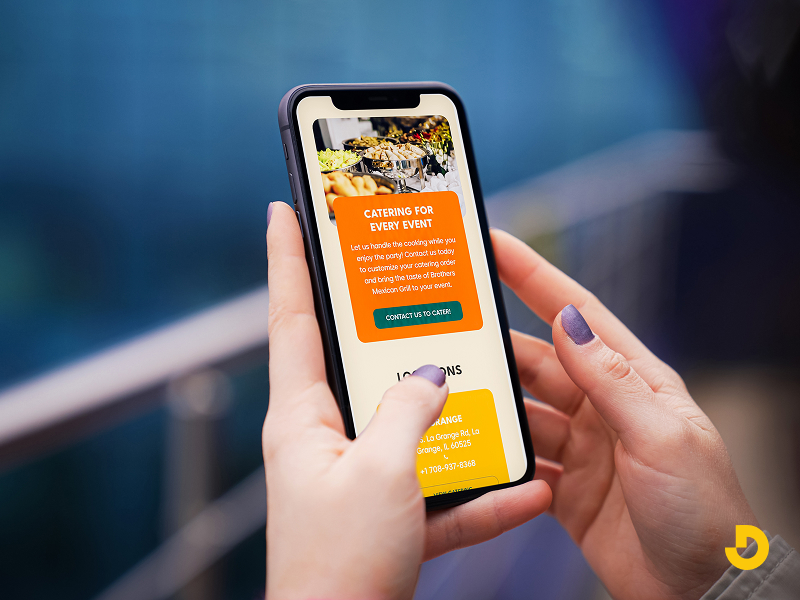
More than half of restaurant searches happen on a phone, often while someone is out and hungry. If your site is hard to tap, slow to load, or shrinks your menu into tiny text, you lose that guest instantly. A mobile-first design keeps buttons big, text readable, and the "Book" and "Call" options always within reach.
The single biggest booking driver is a clear, always-visible reservation button. Whether you use a tool like OpenTable, Resy, or a built-in form, the option should sit at the top of every page. The fewer taps it takes to book, the more tables you fill.
Not everyone wants to book online. A click-to-call button lets phone users dial you with one tap, and a "Get Directions" link opens their maps app instantly. Every step you remove between "I want to eat here" and "I'm on my way" saves a guest.
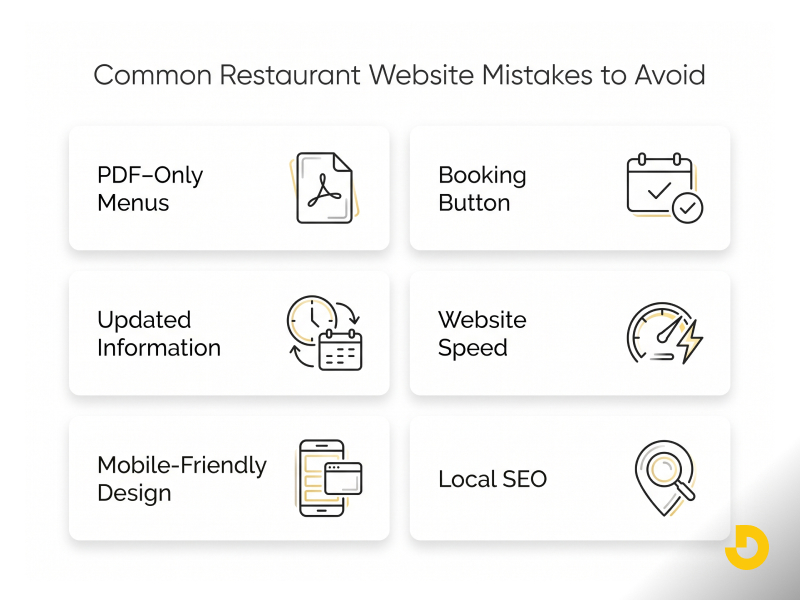
Your menu is the number one page guests visit, yet many restaurants still upload a slow PDF that is painful to read on a phone. Use a real, text-based menu that loads fast and reads clearly. Bonus: Google can read a text menu, helping you rank for searches like "best tacos near me."
People eat with their eyes first. High-quality photos of your signature dishes, your space, and happy guests build instant appetite and trust. Blurry or stock photos do the opposite.
If your website takes more than a few seconds to load, many visitors leave before it appears. Optimized images, clean code, and reliable hosting keep your site fast so guests stay long enough to book.
Diners trust other diners. Featuring your best reviews and ratings near your booking button can be the nudge that turns a browser into a reservation.
None of these features matter if guests cannot find you. Local SEO helps your restaurant appear when people search "restaurants near me" or "[your cuisine] in [your city]" — with consistent contact details, a connected Google Business Profile, and pages that target the dishes and neighborhoods you serve.
Your restaurant website should work like your friendliest host: welcoming guests, showing them the menu, and guiding them to a table without any friction. When your site is fast, mobile-first, and built around booking, it fills seats around the clock.
At The Designocracy, we design and build restaurant websites that do exactly that—beautiful visuals paired with the booking, menu, and local SEO features that turn visitors into guests. If your current site is not filling tables, let's fix that.
Get a restaurant website built to fill tables, not just look good.
Book Your Free Consultation