September 30, 2026
How to Master SEO for Dentists: A Simple Guide to Getting More Patients
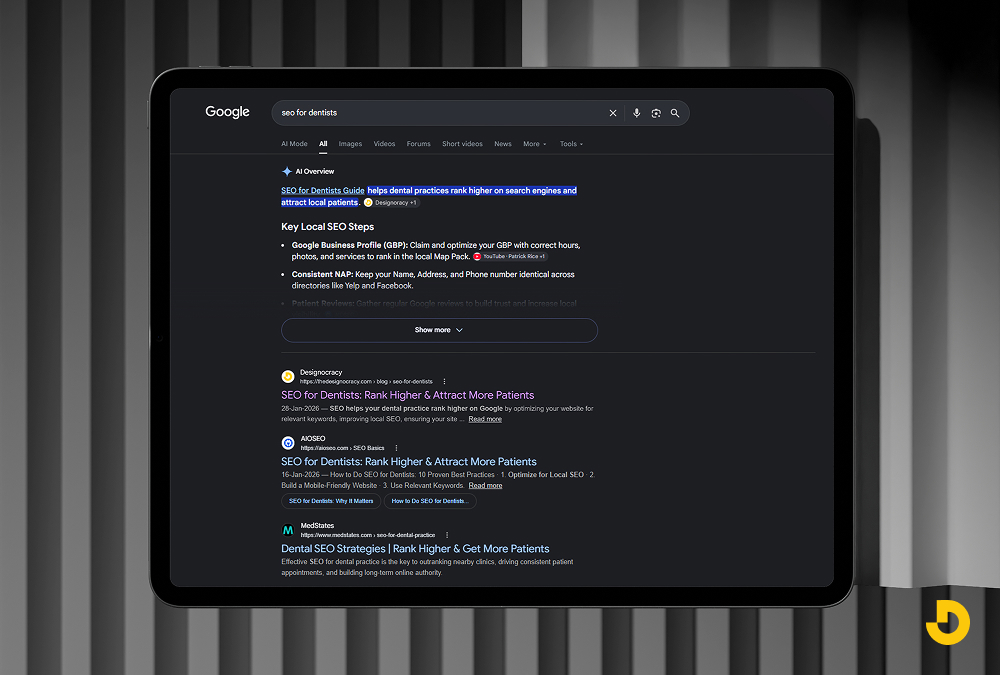
Mastering dental SEO helps your practice rank higher on search engines and turn local online searches into booked patient appointments
Published On: October 6, 2026
Published By: Designocracy

A rebrand can breathe new life into a business, or it can confuse your existing customers and tank the recognition you spent years building. The difference usually comes down to whether you rebrand for the right reasons, at the right time, and with an actual plan instead of just a new logo slapped on top of the same problems.
This rebranding guide walks through when rebranding actually makes sense, how to approach it without alienating the people who already know you, and what tends to go wrong. If you're considering one, Designocracy's strategic brand design process covers this exact process from strategy through execution.
Thinking about rebranding but not sure where to start?
Get a Free Brand & Website Consultation →Knowing when to rebrand matters as much as how you do it. A business should consider rebranding when its current identity no longer matches what it actually does, when it's outgrown its original audience or market, after a merger or major pivot, or when the brand feels visibly dated compared to competitors. Rebranding just because a logo feels "old" without a deeper reason often wastes money and confuses customers who already recognize and trust the existing brand.
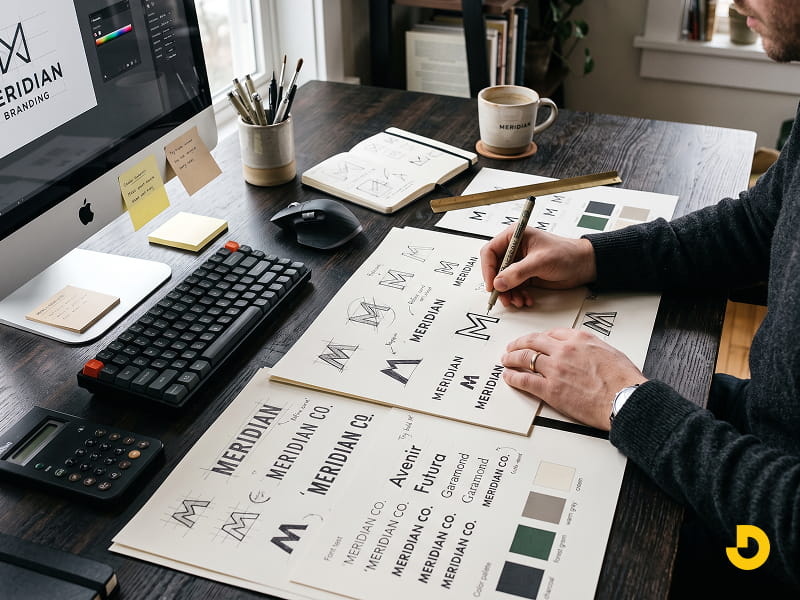
You started as one thing and now you're something else, a local shop that's gone national, a service provider that's expanded into new offerings. If your branding still reflects who you were five years ago, that mismatch confuses new customers and undersells what you've become.
Sometimes a brand identity attracts customers who aren't actually a great fit, while the people you actually want to reach scroll right past. If your visual identity and messaging consistently pull in the wrong crowd, that's a real signal, not just a vibe issue.
Combining two companies, or shifting your core business entirely, almost always requires some level of rebrand. Trying to keep an old identity that no longer represents what you do creates confusion internally and externally.
This one's trickier, because "looks old" alone isn't always a good enough reason. But if your visual identity is actively hurting how credible you look compared to competitors, especially in a space where trust and first impressions matter, it's worth a real look.
Sometimes a brand name or identity carries baggage, a bad period, a reputation issue, an association you want distance from. A rebrand can be part of genuinely moving forward, as long as it's paired with real changes, not just a new coat of paint over the same issues.
Not every problem is a branding problem. Before committing to a rebrand, rule out whether the real issue is something else entirely:
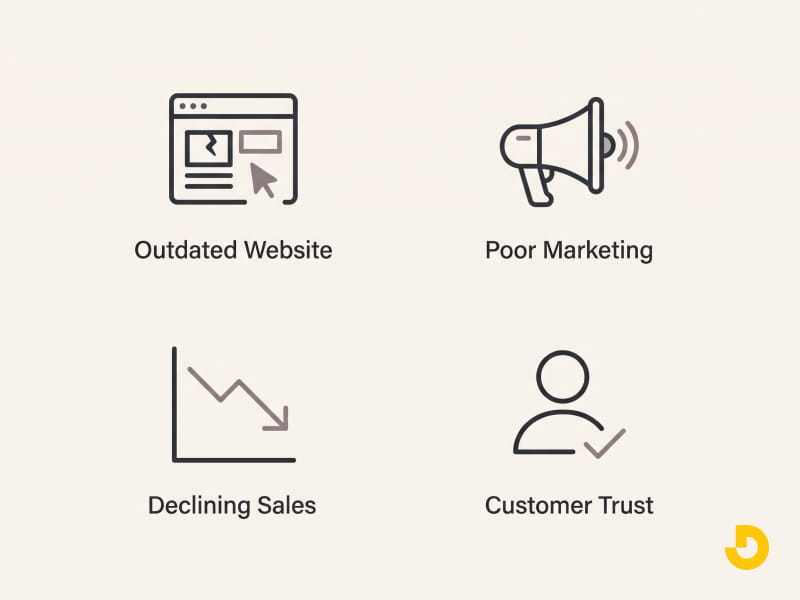
A rebrand won't fix a broken product, a confusing website, or a marketing strategy that isn't reaching the right people. Sometimes what actually needs work is growing your brand's online presence or your site's usability, not your logo.
Before anyone touches a logo, understand why you're rebranding and what you actually need to communicate differently. This is where your rebranding strategy actually gets built, not in the design software. Talk to existing customers if you can. What do they associate with your current brand? What would confuse them if it suddenly changed?
A full rebrand changes your name, logo, colors, and messaging, often used after a major pivot or merger. A refresh keeps your core identity but updates specific elements, maybe a cleaner logo, updated colors, more modern typography, while staying recognizable. Most businesses need a refresh far more often than they need a full rebrand.
| Aspect | Full Rebrand | Brand Refresh |
|---|---|---|
| Name | Often changes | Stays the same |
| Logo | Completely redesigned | Updated or modernized |
| Color Palette | New palette | Refined, often similar hues |
| Messaging | Repositioned entirely | Sharpened, not replaced |
| Typical Trigger | Merger, pivot, major reputation issue | Dated look, minor misalignment |
| Typical Cost | Higher — strategy to rollout | Lower — focused scope |
| Typical Timeline | Several months | Weeks to a couple months |
Completely abandoning everything familiar can feel like starting from zero with your existing audience. Keeping something recognizable, a color, a symbol, a tone of voice, helps bridge old and new instead of making loyal customers feel like they're dealing with a stranger.
A rebrand isn't just a logo. It includes your color palette, typography, tone of voice, and how all of that applies across your website, social profiles, and marketing materials, which is exactly where custom web design work comes in. Without a consistent system, a new logo on an otherwise unchanged, inconsistent brand doesn't accomplish much.
A half-updated brand, new logo on your website but old branding on social media, confuses people more than either version alone. Plan the rollout so everything switches over together: website, social profiles, email signatures, business cards, signage.
Don't just switch it overnight without a word. A short announcement, an email to your list, a post explaining why the change happened, helps existing customers understand and stay with you through the transition instead of wondering if they're looking at the wrong business.
Your website is often where a rebrand shows up most visibly and matters most. A new logo means nothing if the site underneath it still looks and functions like the old brand. This is usually a good moment to handle both together, a full website redesign and development alongside the visual identity refresh, so everything launches in sync instead of in disconnected phases.
Pairing your rebrand with a new website?
See Our Custom Web Design Services →Use this rebranding checklist as a quick reference for the rebranding process steps covered above:
For a meaningful rebrand, including research, strategy, design, and rollout, expect a few months rather than a few weeks. Rushing this process usually shows, and it can end up looking like a surface-level change instead of a genuine repositioning.
A rebrand touches strategy, design, messaging, and execution all at once, which is a lot to manage internally while still running the business day to day. An outside team can bring an objective view of how your brand is actually perceived, something that's genuinely hard to see clearly from inside your own company. Looking at the best branding agencies for small businesses is a reasonable place to start comparing options.
Designocracy works with businesses through the full rebranding process, from figuring out whether a rebrand is even the right move, through design and rollout. If you're weighing whether it's time, reach out and we can talk through where you actually stand.
Rebranding done well can realign your business with where it actually is today and where it's headed. Done poorly, it just confuses the customers who already trust you. Get clear on why you're rebranding before you touch any design work, keep some thread of continuity for your existing audience, and roll everything out together instead of in scattered pieces. That's the difference between a rebrand that works and one that just creates noise.
Ready to rebrand the right way?
Start Your Rebrand With Designocracy →