September 21, 2026
Digital Marketing Strategy for Small Businesses (2026 Guide)
A practical digital marketing strategy for small businesses in 2026. Real priorities, not a 40-tactic checklist you'll never actually finish.
Published On: September 24, 2026
Published By: Designocracy

If you run a local business, Google Maps is probably where most of your customers find you before they ever visit your website. Someone searches "plumber near me" or "best coffee shop downtown," and three results show up in that map pack at the top. If you're not one of them, you're invisible to a huge chunk of people who were ready to buy.
The good news is local SEO isn't as complicated as regular SEO. You're not competing with the entire internet, just the businesses near you. Here's what actually works. If you'd rather have someone handle this for you, Designocracy's SEO services cover local optimization as part of a full strategy.
Google ranks local results based on three main things: relevance (does your business match what someone searched for), distance (how close you are to the searcher), and prominence (how well-known and well-reviewed your business is online). A fully filled-out Google Business Profile, consistent business information across the web, and a steady stream of genuine reviews are the biggest levers most small businesses can actually pull.
This is the single most important thing you can do, and many businesses half-do it and wonder why they're not showing up.
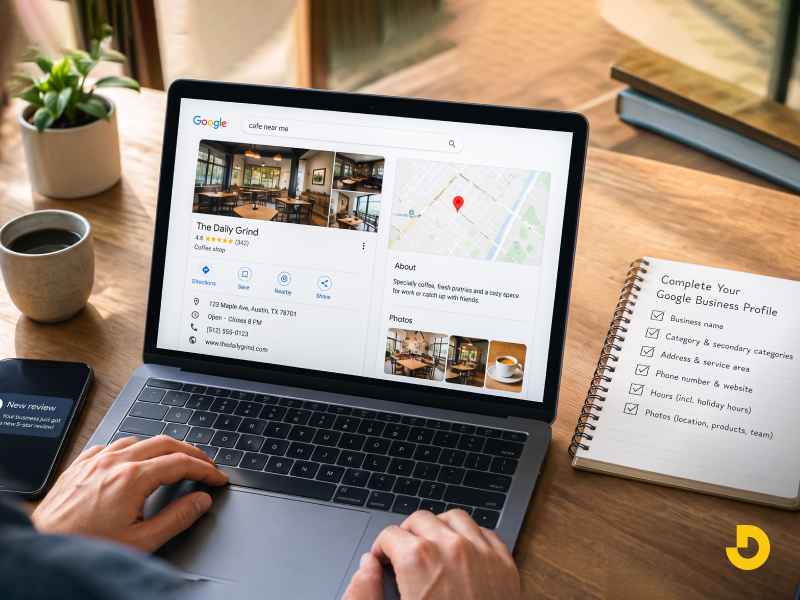
Go claim or verify your listing if you haven't already, then fill out every single field:
Businesses that leave half this stuff blank are basically handing the top spot to a competitor who filled theirs out properly.
NAP means Name, Address, and Phone number. Sounds simple, but it trips up a surprising number of businesses. If your Google listing says "123 Main St," and your website footer says "123 Main Street," and Yelp has your old phone number, that inconsistency confuses Google and can quietly hurt your ranking.
Go through your major listings, Yelp, Facebook, Bing Places, and industry directories, and make sure everything matches exactly. It's tedious. It's also one of those things that pays off long after you've forgotten you did it.
Reviews aren't just a trust signal for customers; they're a ranking factor too. More reviews, and more recent reviews, tend to correlate with better map placement.
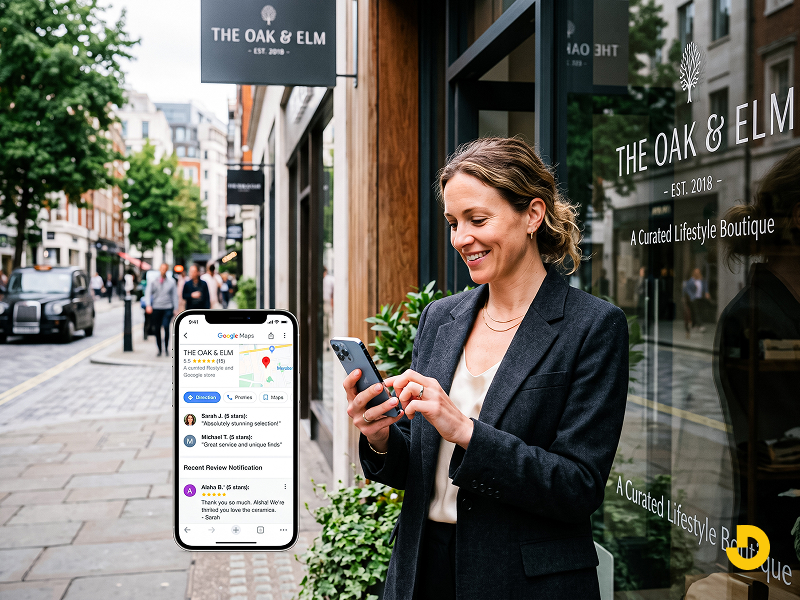
A few things that actually help:
A citation is any online mention of your business name, address, and phone number, even without a link back to your site. Local directories, chamber of commerce sites, and industry-specific listings- they all count.
You don't need hundreds of these. A handful of relevant, accurate citations usually beats a hundred sloppy ones scattered across low-quality directories.
Your Google Business Profile does a lot of heavy lifting, but your actual website still matters. Make sure your site content naturally includes your city or service area, not stuffed in awkwardly, just written the way you'd actually talk about your business.
If you serve multiple areas, consider a dedicated page for each one instead of trying to cram every city into your homepage. This connects to a broader website structure that search engines can actually understand.
A link from a local news site, a chamber of commerce, or a community blog carries real weight for local search. Sponsor a local event. Partner with another nearby business for a joint promotion. These relationships tend to produce backlinks naturally, and they're a lot more valuable than a generic directory link.
Most map searches happen on a phone: someone's standing outside deciding where to eat, or driving and needs a mechanic right now. If someone clicks through from your map listing to a slow, clunky mobile site, you've lost them even after you did the hard work of getting found. This is exactly why mobile-first design matters just as much for local businesses as it does for anyone else.
Google lets you post updates, offers, and events directly to your profile, kind of like a mini social feed. Most businesses never touch this feature. Using it regularly, even just once or twice a month, signals to Google that your listing is active and maintained, which can help your ranking.
Google Business Profile gives you basic insights: how many people viewed your listing, how many called, how many asked for directions. Check this occasionally. If calls are up but website clicks are flat, that tells you something. If neither is moving, it's probably time to revisit your profile completeness or your review count.
Most of these aren't hard to fix. They just get overlooked because they feel like "boring admin work" instead of exciting marketing. But this boring stuff is exactly what moves the needle in local search.
Don't expect overnight results. Most small businesses start seeing meaningful movement in three to six months, faster if you're in a less competitive area, slower if you're in a crowded market like a big city with a lot of established competitors. Reviews and citations especially take time to build up naturally.
You can absolutely do all of this yourself, and for a single-location business, that's often the right call. But if you're juggling multiple locations, a competitive market, or you just don't have the time to keep up with reviews, citations, and content, that's usually when it makes sense to bring in help.
Designocracy works with small businesses on local SEO alongside broader website and design work, so your Google Maps presence and your actual site are working together instead of pulling in different directions. If you want a quick look at where your business currently stands, reach out here.
Local SEO isn't about tricking Google; it's about giving it accurate, complete, and consistent information so it can confidently recommend you. Fill out your Google Business Profile completely, keep your business info consistent everywhere, get real reviews, and don't neglect your actual website. Do those four things well, and you're already ahead of a lot of your competition.