September 15, 2026
UI vs UX Design: What's the Difference? (Simple Guide)
UI and UX design are not the same. This easy book explains the difference and provides real-world examples, so you know exactly what your project requires.
Published On: September 21, 2026
Published By: Designocracy

Most "digital marketing strategy" guides hand you a list of 40 things to do and call it a day. SEO, email, TikTok, podcasts, paid ads, influencer partnerships, all of it, all at once. If you're running a small business, you don't have a marketing department. You have maybe a few hours a week and a budget that needs to actually pay off.
So let's not do that. This is a strategy built around picking a few things that work and doing them consistently, instead of spreading yourself across everything and doing none of it well. If you'd like help building this, Designocracy works with small businesses on exactly this kind of focused approach.
A solid small business marketing strategy in 2026 starts with a clear picture of who your customer actually is, a website that converts the traffic you send to it, one or two content channels you can maintain consistently, and a way to track what's actually driving revenue. Trying to be everywhere at once with limited time and budget usually produces worse results than doing two or three things really well.

Before picking channels or tactics, get specific about your customer. Not "small business owners," but the actual person: what they're frustrated by, where they spend time online, what makes them trust a business enough to buy from it.
A lot of small businesses skip this and jump straight to "we should post on Instagram" without ever answering whether their customer is even on Instagram. Twenty minutes thinking this through saves months of wasted effort later.
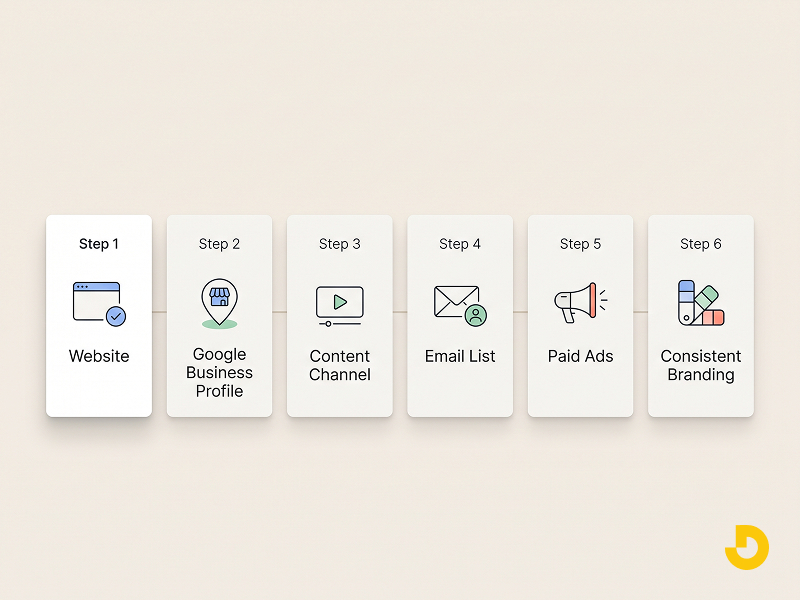
Every other marketing effort, ads, social, email, eventually points people back to your website. If that site is slow, confusing, or doesn't clearly explain what you do, you're paying to send traffic to a leaky bucket.
A few things worth checking before you invest heavily elsewhere:
Fixing a weak website often does more for your bottom line than any new marketing channel you could add.
This is where small businesses burn out the fastest. You don't need to be on every platform. You need to be consistently good on one or two.
If your customers are searching for solutions on Google, invest in SEO and blog content. If they're scrolling social media looking for inspiration or recommendations, a platform like Instagram or TikTok might matter more. Pick based on where your actual customers are, not based on what's trendy this month.
Social platforms change their algorithms constantly, and you don't own that audience. Your email list, you do own. Even a simple monthly newsletter with updates, tips, or offers keeps you in front of past customers without paying for ads every time.
Start collecting emails now, even before you have a "strategy" for what to send. A simple signup offer, a discount, a helpful guide, a free consultation gets this moving.
If customers need to visit you, or you serve a specific region, local search matters more than almost anything else. A complete, accurate Google Business Profile with real reviews can outperform a much bigger marketing budget spent elsewhere. This is worth its own focused effort rather than an afterthought tacked onto general SEO.

A common misconception is that you need to publish daily to see results. What actually matters more is content that genuinely answers questions your customers are searching for, published consistently, even if that's just twice a month. One well-written, genuinely useful post beats ten rushed ones nobody finishes reading.
Paid advertising can work well for small businesses, but only if you know your numbers. What's a customer worth to you? What can you afford to spend to acquire one? Without that math, it's easy to burn through a budget without knowing if it's actually working.
Start small, track results closely, and scale up only what's proven to convert. Don't spread a small budget across five ad platforms hoping something sticks.
A lot of small businesses treat design as something to get to "eventually." But inconsistent branding, mismatched colors, fonts, and messaging across your website and social profiles, quietly erodes trust before a customer even reads your offer. A consistent brand identity makes every other marketing effort work harder, because people recognize and trust you faster.
You don't need a complicated dashboard. At minimum, track:
Checking this monthly, even briefly, tells you what to double down on and what to quietly drop.
Not every trend deserves your limited time and budget. Unless it's clearly where your customers already are, it's fine to skip:
You can always add more once the basics are working. Adding complexity before you have a foundation just spreads you thinner.
Plenty of small businesses run their own marketing successfully, especially in the early stages. But once you're juggling a website, content, ads, and everything else on top of actually running your business, something usually slips. That's often the point where it makes sense to hand off a piece of it, even just the website and design side, so you can stay focused on what you do best.
Designocracy works with small businesses on the website and design foundation that everything else in your marketing depends on. If you're not sure where your strategy has gaps, get in touch, and we'll help you figure out what's actually worth prioritizing.
A digital marketing strategy for a small business doesn't need to cover everything; it needs to cover the right few things, done consistently. Start with a website that actually works, pick one or two channels you can realistically maintain, and track what's actually bringing in customers. Everything else can wait until the foundation is solid.