
October 20, 2026
HVAC Web Design Guide: Complete 2026 Strategy for Contractors
HVAC website design guide for contractors: essential pages, platform comparison, Core Web Vitals, and conversion tactics to turn visitors
Published On: July 21, 2026
Published By: Designocracy
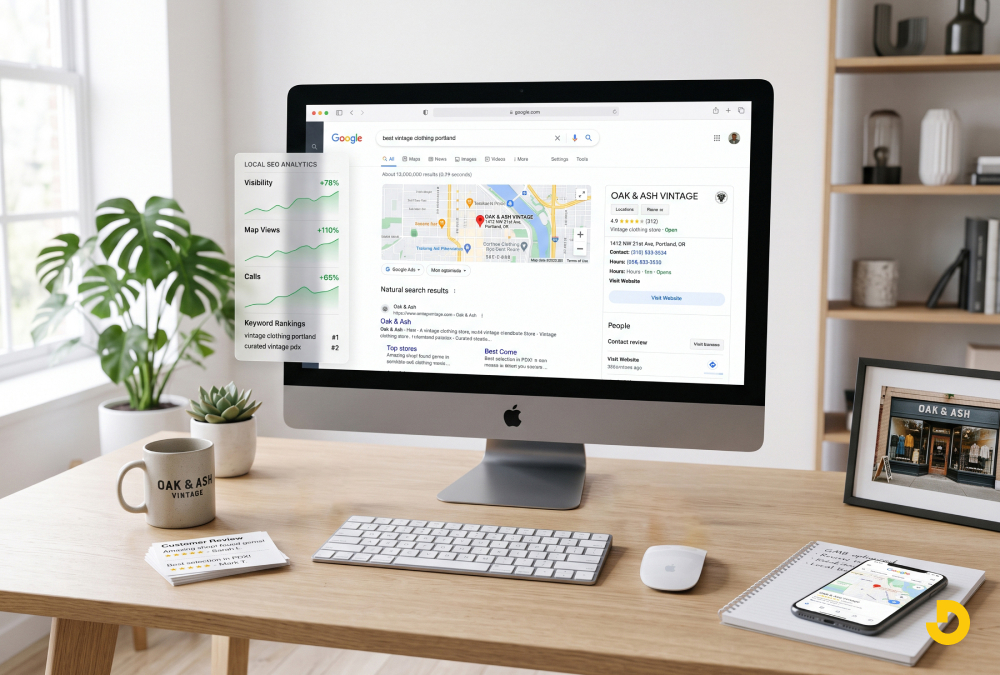
Local SEO is the process of optimizing your online presence so your business appears in local search results, such as Google Maps and "near me" searches. For a small business, it focuses on your Google Business Profile, consistent contact details, local keywords, and customer reviews to attract nearby customers who are ready to buy.
When someone nearby searches "coffee shop near me" or "plumber in [your city]," the businesses at the top of those results win the customer. That top spot is not luck — it is the result of local SEO services. And for a small business competing against bigger brands, local SEO is one of the most cost-effective ways to get found by people who are ready to walk in, call, or buy.
This step-by-step guide breaks down exactly how to improve your local search rankings, even if you have never touched SEO before. Follow the steps in order and you will build a strong local presence that keeps sending customers your way.
Local SEO is a set of strategies that help your business rank in local searches—the results that show up when people look for products or services "near me" or in a specific location. It covers your Google Business Profile, your website, online reviews, and the way your business information appears across the web.
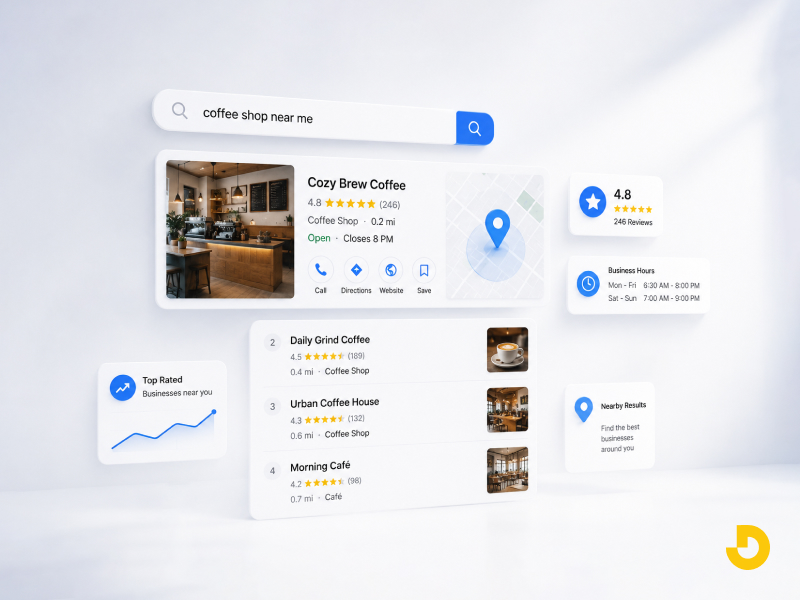
Here is why it matters so much for small businesses. Most local searches lead to fast action: a large share of "near me" searches end in a visit or purchase within a day. If your business does not appear when nearby customers search, you are handing those sales to a competitor. Strong local SEO puts you in front of high-intent buyers exactly when they are deciding where to spend their money.
Here is the full process at a glance, followed by a detailed breakdown of each step.
Local SEO checklist: the 7 core steps
| Step | What to Do | Why It Helps You Rank |
|---|---|---|
| 1. Google Business Profile | Claim, verify, and fully complete your profile. | It is the number one factor for showing up in the local map pack. |
| 2. NAP consistency | Keep your Name, Address, Phone identical everywhere. | Consistent details build trust with Google and customers. |
| 3. Local citations | List your business in trusted directories. | More consistent listings signal that your business is real and established. |
| 4. Local keywords | Target "[service] in [city]" terms on your pages. | Helps Google match your site to nearby searches. |
| 5. Online reviews | Earn and respond to genuine customer reviews. | Reviews boost rankings and convince buyers to choose you. |
| 6. On-site SEO | Make your site fast and mobile-friendly; add local schema. | A strong website supports every other ranking signal. |
| 7. Track & improve | Monitor rankings, calls, and profile insights. | Shows what is working so you can double down on it. |
Work through these seven steps in order for the fastest, most durable results.
Your Google Business Profile (formerly Google My Business) is the single most important part of local SEO. It is what powers the map listings and the local "3-pack" that appears above regular search results. Claim it, verify ownership, and fill in every field: business name, categories, hours, services, service areas, and a clear description.
Then keep it active. Add real photos of your business, post updates, list your products or services, and answer questions. A complete, active profile ranks higher and earns more clicks than a bare one.
NAP stands for Name, Address, and Phone number. Google cross-checks these details across the web to confirm your business is legitimate. If your address is written one way on your website and another way on a directory, that mismatch can hurt your local search rankings.
Pick one exact format for your business details and use it everywhere — your website, your Google profile, social pages, and every directory. Consistency is a quiet but powerful ranking signal.
A citation is any online mention of your business name, address, and phone number. Listings in trusted directories like Yelp, Bing Places, Apple Maps, and industry-specific sites tell Google your business is established and real.
Focus on quality directories relevant to your area and industry, and make sure every listing uses your exact NAP. A handful of accurate, reputable citations beats dozens of sloppy ones.
To rank for local searches, your website needs to speak the language your customers use. That means targeting local keywords such as "[your service] in [your city]" or "[your product] near [neighborhood]" in your page titles, headings, and content.

If you serve multiple areas, create a dedicated, genuinely useful page for each location instead of stuffing every city into one page. Each page should have real, unique local information — not the same text with the city name swapped in, which search engines can penalize.
Reviews are gold for local SEO. They influence your rankings and heavily sway which business a customer picks. Make it easy for happy customers to leave a review by sending a direct link after a purchase or visit.
Just as important, respond to reviews — both positive and negative. A thoughtful reply to a complaint shows future customers you care, and steady, genuine reviews signal to Google that your business is active and trusted.
Your website ties everything together. Make sure it loads fast, works smoothly on mobile, and has clear pages for your services and location. Add local business schema markup so search engines can easily read your name, address, hours, and reviews.
Also include your city and service areas naturally in your page titles, headings, and image descriptions. A clean, fast, locally optimized site supports every other ranking signal you build.
Local SEO is not a one-time task. Track how you rank for your target local keywords, watch the insights in your Google Business Profile (calls, direction requests, clicks), and note which pages bring in leads.
Use that data to focus your effort. Double down on the pages, keywords, and directories that drive real customers, and steadily improve the rest over time.
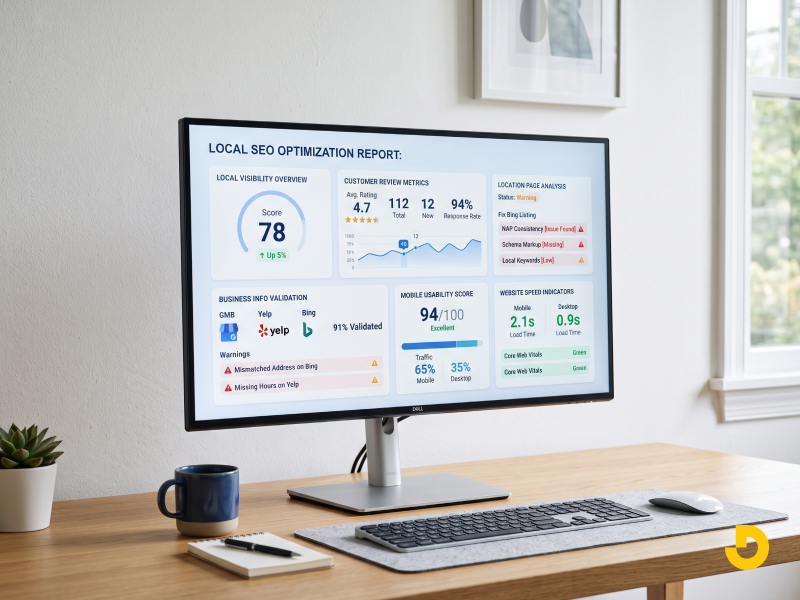
Local SEO rewards consistency. Optimize your Google Business Profile, keep your details accurate, target the searches your customers actually use, and earn genuine reviews — and over time you will climb the local rankings and win more nearby business.

If you would rather focus on running your business than managing all of this yourself, the team at Designocracy builds and manages local SEO strategies that put small businesses in front of the customers searching for them. We handle the setup, the optimization, and the tracking, so you get the calls, visits, and sales.